

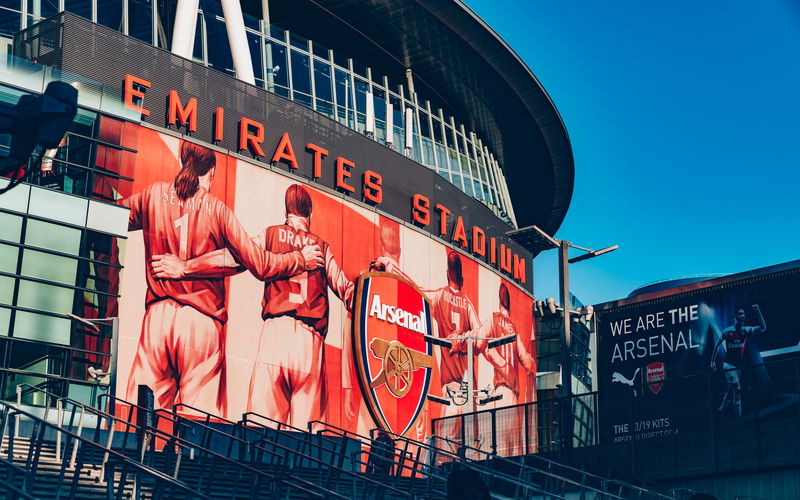
Arsenal have developed a habit of making their supporters wait. Noni Madueke’s 80th-minute winner against Nottingham Forest was the latest example, taking the Gunners’ second-half tally to eight of their 11 Premier League goals this season. It is a striking split for a team defending the title, particularly when their first-half performances have often lacked attacking urgency. But is there something tactical behind the pattern, and should it influence expectations in the betting markets?
Arsenal’s Second-Half Goals Tell Two Different Stories
Across their first seven Premier League matches, Arsenal have scored 72.7% of their goals after the interval. They have found the net in the second half in six of those seven fixtures, with Brighton’s 3-0 victory in September the only exception.
Yet describing Arsenal as specialists in late goals would be misleading.
Four of their eight second-half goals arrived between the 46th and 60th minutes. Martin Ødegaard scored shortly after the restart against Coventry and Chelsea, Bukayo Saka struck in the 59th minute against Aston Villa, and Bruno Guimarães opened the scoring against Sunderland in the 58th.
Only two goals have arrived after the 75th minute: Saka’s stoppage-time effort at Sunderland and Madueke’s winner at Forest.
That distinction matters. Scoring immediately after the break suggests a different pattern from repeatedly finding a winner in the closing minutes.
Arsenal have also failed to score before half-time in five of their seven league games. Whether that reflects cautious opening tactics, opposing teams defending deeper or Arteta making effective adjustments during the interval is harder to establish.
Arteta’s Substitutes Are Making the Difference
There is one aspect of Arsenal’s second-half performances that is easier to measure: the contribution from their substitutes.
Three of their eight second-half league goals have come from players introduced during matches.
Against Leeds United on 10 October, Arsenal trailed after James Justin scored in the 55th minute. Riccardo Calafiori equalised seven minutes later before Guimarães, introduced from the bench, completed the turnaround in the 70th.
Guimarães had already made a similar impact against Sunderland, scoring after replacing a team-mate at half-time.
The latest example came at the City Ground. Eberechi Eze struggled to influence the first half against Nottingham Forest and was replaced by Madueke at the interval. The winger eventually broke the deadlock with a deflected strike, Arsenal’s only shot on target of the afternoon.
Arteta deserves credit for those interventions. Fresh legs and different attacking options can change the problems facing an opposition defence, particularly when the starting eleven has struggled to find openings.
However, there is a difference between making successful substitutions and deliberately planning to win matches late. Arsenal would surely prefer to establish control on the scoreboard earlier rather than repeatedly depend on their bench.
The Slow Starts Could Still Become a Problem
Six wins from seven league matches represent an excellent start to a title defence. Arsenal have already shown they can recover from difficult situations, as their comeback against Leeds demonstrated.
But the attacking numbers offer reasons for concern.
Eleven goals in seven matches work out at just 1.57 per game. That is a modest return for a side competing at the top of the Premier League, especially considering the attacking quality available to Arteta.
Against Forest, Arsenal controlled long stretches of the match without turning possession into clear opportunities. They did not register a shot on target until Madueke scored.
The contrast with the 3-0 defeat at Brighton is important. Arsenal could not produce a second-half response on that occasion, demonstrating that patience and substitutions will not always solve their attacking problems.
There is also the question of stronger opponents. Falling behind against Leeds and finding a way back is encouraging, but consistently starting slowly against teams with greater attacking quality could prove much more costly.
Arsenal’s resilience is becoming a strength. Their difficulty establishing first-half leads is still something Arteta needs to address.
What Does Arsenal’s Scoring Pattern Mean for the Odds?
For those following football betting markets, Arsenal’s scoring distribution raises an obvious question: should the second half carry greater weight when assessing their matches?
Markets such as the highest-scoring half, half-time/full-time result and next goalscorer are particularly relevant.
A team that regularly improves after the interval may appear attractive in second-half goal markets. Likewise, Arsenal’s recent ability to recover from difficult positions could influence expectations when they reach half-time without a lead.
But identifying a trend and finding favourable odds are not the same thing.
Bookmakers adjust their prices according to the match situation, available statistics and new information. Arsenal’s recent second-half record is public knowledge, and there is no verified evidence that bookmakers have failed to account for it.
The distinction between assessing a betting market and assessing the operator behind it is also worth making. Readers consulting Curaçao casino reviews can find information about gambling operators and licensing conditions, but those details cannot establish whether the odds on an Arsenal second-half goal represent good value. A Curaçao licence alone also does not authorise a gambling website to serve customers in Great Britain.
For Arsenal’s matches, the more relevant questions concern the opposition, team selection, chances created and whether the Gunners are actually improving after half-time.
Seven matches provide useful observations, but not enough evidence to conclude that the scoring pattern will continue or that betting markets are pricing it incorrectly.
Arsenal face Bayern Munich in Europe before hosting Everton on 24 October, giving Arteta another opportunity to demonstrate that his side can produce a more convincing attacking performance from the opening whistle.
For supporters, the priority is straightforward: fewer frustrating first halves and more comfortable victories. Eight second-half goals from 11 is an interesting statistic, but it is not a dependable prediction. Anyone considering a wager should recognise that uncertainty and follow responsible gambling guidance on managing risk and setting limits.
Image Source: unsplash.com