

Arsenal is reportedly exploring an ambitious and complex plan to significantly expand The m the Emirates Stadium capacity to beyond 70,000.The multi-million-pound project, which could temporarily force the club to play at Wembley Stadium, is driven by a critical need to substantially boost matchday revenue and reclaim the title of London’s largest club ground, marking a new era of financial necessity in elite football.
The Expansion Plan: Complexity and Capacity Boost
The current capacity of the Emirates Stadium stands at 60,704. The proposed expansion to over 70,000 seats is being described as a “complex logistical challenge,” expected to cost up to £500 million.
The complexity stems from the fact that the work is likely to involve adding to almost every part of the stadium rather than just a single stand. Initial options being explored, with the goal of keeping the stadium’s distinctive exterior largely similar, include:
- Changing the gradient of the stands to accommodate more seats.
- Re-configuring seating and adjusting the slope of the roof.
- Adding new tiers or filling the two corner gaps that do not currently house big screens.
The club has yet to submit a formal planning application, a crucial process that, for a project of this scale on a constrained 17-acre site surrounded by residential areas and rail lines, could take up to five years to secure.
The Financial Imperative: Fuelling Future Investment
The motivation behind this massive undertaking is primarily financial. With a season ticket waiting list reported to be more than 100,000, demand clearly outstrips supply, meaning the club is leaving significant revenue on the table. Increasing the capacity would generate tens of millions of pounds in additional annual matchday revenue.
This income is now more vital than ever, particularly because spending on stadium infrastructure is often excluded from the Premier League’s Profit and Sustainability Rules (PSR), while the increased matchday income directly boosts the club’s total revenue. This effectively provides Arsenal with greater headroom to invest in the playing squad and remain competitive in the transfer market, making the expansion a strategic business necessity. The expansion would restore Arsenal’s status as the club with the biggest Premier League ground in London, overtaking rivals like Tottenham Hotspur and West Ham United.
The Kroenke Factor & SoFi Success
The ambition and scale of the project are underpinned by the experience of club owners, Kroenke Sports & Entertainment (KSE). KSE has a significant global track record with major infrastructure projects, most notably the construction and financing of the 5.5 billion, 100,000-capacity SoFi Stadium in Los Angeles, home of the NFL’s Los Angeles Rams. The involvement of KSE representatives with commercial real estate and development expertise adds significant credibility to the feasibility of tackling the Emirates renovation, which is acknowledged internally as “not an easy renovation.”
Drawing Inspiration from the Bernabéu
Arsenal’s plans are said to be drawing inspiration from the recent, extensive renovation of Real Madrid’s Santiago Bernabéu stadium.
- Real Madrid’s Transformation: Real Madrid’s multi-year project, costing approximately £1 billion, increased capacity to over 83,000. Crucially, the renovation was aimed at creating a year-round revenue-generating hub with a futuristic design, a retractable roof, and a unique pitch storage system to host non-football events like concerts and basketball.
- Revenue Uplift: Real Madrid reported a massive financial return, with matchday income and stadium-related revenues reportedly doubling a rise of up to £230 million following the completion of the works. This success provides a clear blueprint for the financial transformation Arsenal is targeting.
The Wembley Dilemma: A Temporary Move
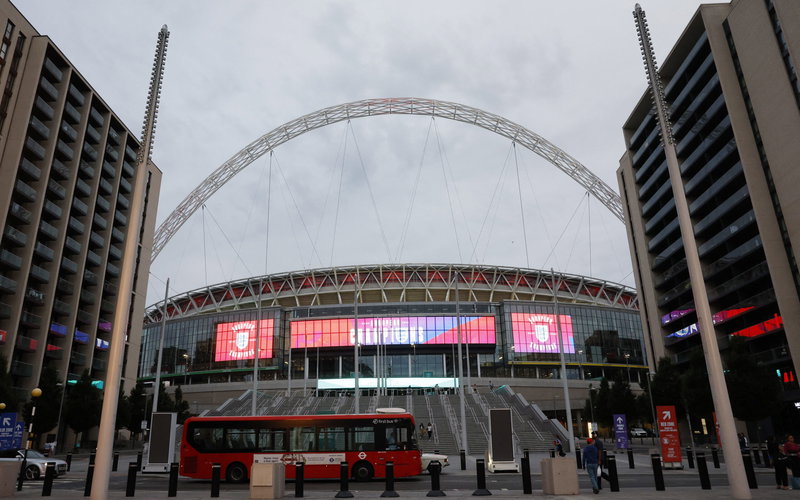
To carry out the extensive internal and structural works, Arsenal is considering temporarily relocating their home matches. The most likely temporary venue is the 90,000-capacity Wembley Stadium.
While a move would ensure the work is completed, the prospect of playing away from their home ground carries risks of disrupting the team’s momentum and the atmosphere at home games under Mikel Arteta. However, the club can look to their North London rivals for a logistical precedent: Tottenham Hotspur successfully utilised Wembley as their temporary home for nearly two seasons while their new ground was being built, a period that reportedly cost them around £15 million in rent to the Football Association (FA).
Conclusion
Ultimately, the Emirates expansion represents a pivotal moment for Arsenal. It is a calculated, multi-million-pound commitment by the Kroenkes, driven by the inescapable logic that major infrastructure is the new frontier of financial competitiveness in European football. While the prospect of a temporary switch to Wembley may be a bitter pill for fans to swallow, the club is betting that this short-term disruption is a necessary price to pay for a modern, 70,000+ capacity stadium a fortress that will not only meet soaring fan demand but, crucially, provide the financial engine required to sustain success on the pitch for the next generation of Gunners.
Images courtesy of Reuters/Action Images