

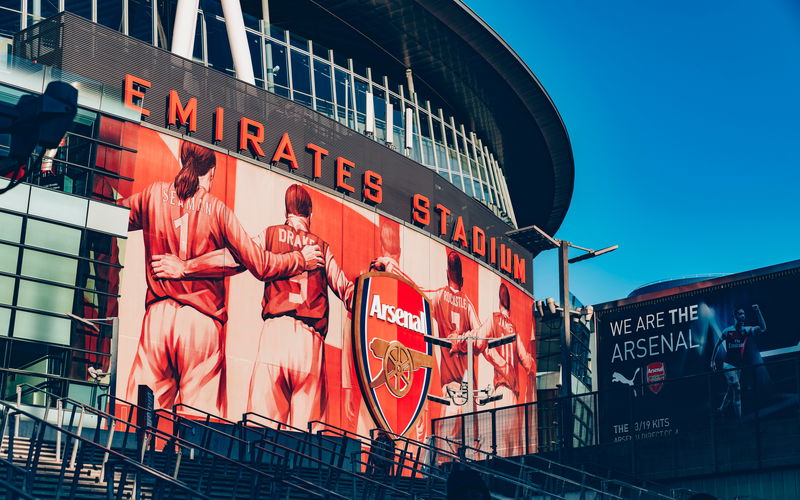
Arsenal’s last Premier League-winning side still sets the benchmark.
Arsenal last won the Premier League in the 2003–04 season, when Arsene Wenger’s side completed the campaign unbeaten and secured a place in English football history. More than two decades on, that team still shapes how every serious Arsenal title challenge is judged.
That is why the comparison has resurfaced again this season. Across football coverage, partner content and the wider online sports space, names like BetGoodwin casino often appear around the game, but the bigger Arsenal story is on the pitch: whether this current side has the quality, control and mentality to go further than recent challengers and bring the title back to north London.
It is a fair question. Not because this team has to replicate the Invincibles, but because it has given supporters a reason to think in those terms again.
Why the 2003–04 side remains so important
The Invincibles are often reduced to one statistic, but the achievement was about far more than finishing the season without defeat. That Arsenal team had authority. It could dominate possession, punish teams in transition, manage difficult spells and win matches in different ways.
There was elite quality throughout the side, but there was also clarity. Wenger’s team knew exactly what it was. Opponents knew it too and still struggled to stop it. That combination of confidence, technical ability and competitive edge is what made that title-winning campaign so memorable.
For Arsenal supporters, the relevance of that season has never really faded. It is the reference point whenever the club puts together a run that feels substantial rather than temporary.
Why this season feels worth comparing
This Arsenal team does not play in exactly the same way, and it does not need to. The Premier League is different now. Matches are more tactical, squad depth matters more and the margin for error is smaller. Winning the title in the modern game requires more than rhythm and flair. It demands structure, control and consistency over a long period.
That is where this side has impressed.
Rather than relying purely on moments, Arsenal have looked organised and disciplined for most of the campaign. They have defended with authority, handled pressure better than in some previous title races and shown a stronger ability to manage matches when the stakes rise.
That may be the clearest sign of progress. Teams do not stay in the title conversation by accident at this stage of a season. They do it by collecting points when performances are not perfect, by avoiding emotional swings and by building trust in the system.
The major difference between Wenger’s champions and the current side
The Arsenal team of 2003–04 was driven by iconic individuals at their peak. Thierry Henry could decide games on his own. Patrick Vieira set the tone physically and mentally. Robert Pires and Dennis Bergkamp brought intelligence and composure in the final third. It was a side with world-class talent and the experience to use it.
The current Arsenal side is built differently. It feels more collective, more measured and more reflective of the modern game. Its strength lies less in one or two unstoppable figures and more in its overall balance. There is greater emphasis on defensive shape, pressing structure and controlling territory.
That does not make it lesser. It makes it different.
In fact, one of the most encouraging signs for Arsenal is that this team does not look dependent on nostalgia or style points. It looks like a side trying to win the league in the conditions of today’s Premier League, not recreate the past.
Why the pressure is greater now
When Arsenal won the title in 2003–04, they were confirming themselves as the best team in the country. If they win it now, the meaning will feel different.
This time, it would end a long wait. It would validate years of rebuilding. It would also silence the idea that Arsenal can compete well over long stretches without finishing the job.
That is why every late-season result feels heavier than it otherwise might. The pressure surrounding Arsenal now is not only about the table. It is about history, expectation and the knowledge that opportunities like this are never guaranteed to return.
For supporters, that creates a different emotional climate from the one that surrounded Wenger’s great side. Back then, Arsenal were operating from a position of established strength. Now, they are trying to complete a return.
What links both teams
The strongest link between Arsenal’s last title winners and the current side is not style, profile or even personnel. It is maturity.
The 2003–04 team had complete belief in itself. It knew how to respond to pressure, how to ride difficult moments and how to keep moving when the season tightened. The current team has shown more of those qualities than some of its recent predecessors.
There is more calm in its play. More patience in big moments. More evidence that players understand how title races are won: not through emotion alone, but through control, discipline and consistency.
That does not mean this side has already earned the same status. It means it is showing some of the same underlying traits that serious champions need.
The bigger picture for Arsenal
Whether Arsenal go on to win the title or not, this season has already shifted the tone of the conversation around the club. Arsenal are no longer being framed simply as a talented team with potential. They are being measured against the last Arsenal side that actually won the league.
That is a sign of progress in itself.
The Invincibles will always stand apart because of what they achieved. No modern Arsenal team needs to copy them exactly. But if this side can finish strongly, handle the pressure of the run-in and turn promise into a title, it will have made its own case for lasting relevance.
And that is why the comparison matters. It is not really about reliving 2003–04. It is about understanding how close Arsenal are to writing a significant chapter of their own.
Image Source: unsplash.com