

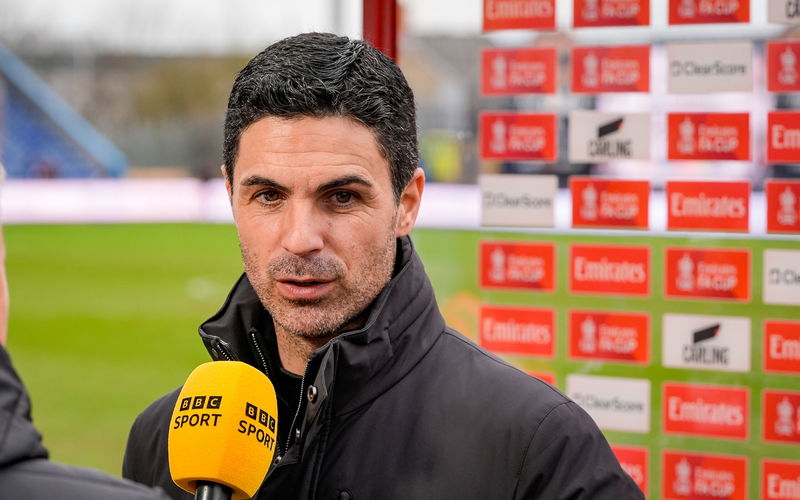
In the hyper-reactionary landscape of modern football, the phrase “Trust the Process” has undergone a strange evolution. Once a term of derision used to mock Mikel Arteta’s early stumbles at the Emirates, it has become a protective shield for every struggling manager in the Premier League. From the boardrooms of Old Trafford to the pundits’ desks at Sky Sports, the same tired narrative is wheeled out whenever a high-profile coach faces a string of losses: “Mikel Arteta was given time, and look at him now.”
However, for those who witnessed the Arsenal journey from the moment Unai Emery’s tenure collapsed into toxic chaos, these comparisons feel hollow and intellectually dishonest. They ignore the specific political, financial, and cultural variables that made Arteta’s first 50 games—and his subsequent years—a “one-of-one” event. Comparing other managers to Arteta isn’t just lazy journalism; it’s a failure to understand what a true structural rebuild actually requires.
1. Ground zero: Inheriting a club in identity crisis
To understand why the comparison fails, one must look at the state of Arsenal in December 2019. This wasn’t a squad that needed a tactical tweak or a new “motivation” coach; it was a club in the midst of an existential identity crisis.
-
The cultural rot: Arteta inherited a dressing room defined by player power and high-earning veterans who were physically and mentally past their peak. The “non-negotiable” weren’t just a catchy phrase for a documentary; they were a survival mechanism for a club that had “lost its soul.”
-
The Saka factor: The scale of the turnover is best illustrated by a single fact: only one player from Arteta’s first match day squad—Bukayo Saka—remains a pillar of the team today.
Most managers are hired to win games; Arteta was hired to save a crumbling institution. When pundits point to his 8th-place finishes, they omit the fact that he was performing “open-heart surgery” on the club’s culture.
2. The great purge: Financial bravery vs. squad management
A critical area where the “Arteta vs. The World” comparison falls apart is the sheer ruthlessness of the Arsenal overhaul. Most managers are compared to Arteta based on time, but few are compared based on the financial sacrifice required to fix the squad.
Arteta and Sporting Director Edu Gaspar did something almost unprecedented in the “Big Six” era: they paid world-class players to leave. The terminations of contracts for Mesut Özil, Pierre-Emerick Aubameyang, Shkodran Mustafi, and Sead Kolasinac represented a massive short-term financial hit. It was a scorched-earth policy designed to remove any player who didn’t align with the new vision.
In contrast, many managers currently being shielded by the “Arteta comparison” are unwilling or unable to alienate high-paid stars. Arteta didn’t just survive 50 games; he spent them dismantling a broken hierarchy that had plagued the club for a decade.
3. The 50-game myth: Stats vs. Narrative
The media often cites Arteta’s “miserable” start to justify patience for others, but the actual statistics from his first 50 games tell a different story. In reality, Arteta’s “poor” start was statistically superior to almost every manager he is compared to today.
Arteta’s First 50 Games vs. The “Rebuilders”: Arteta managed a win rate of 54% (27 wins), keeping 18 clean sheets and conceding just 48 goals. Compare this to the likes of Ruben Amorim’s first 50 games at Manchester United, where the win rate sat at a dismal 38%, with 76 goals conceded.
Arteta’s Arsenal was “difficult to beat” even during the darkest months of the rebuild. He inherited a team in 10th and improved them; he didn’t inherit a Champions League squad and sink them further. The narrative that he was “failing” for two years is a revisionist history that ignores the tactical floor he was building from day one.
4. The trophy armour: Silverware as political capital
One of the most overlooked factors in Arteta’s survival was his immediate success in cup competitions. Within months of arriving, he defeated Pep Guardiola’s Manchester City and Frank Lampard’s Chelsea to win the FA Cup. He followed it up with a Community Shield victory against Liverpool.
This silverware provided “political capital” that most rebuilding managers never achieve. It proved to the fans and the board that his tactical ideas could deliver results on the biggest stage, even with a flawed squad. When the media asks why other managers aren’t given “Arteta time,” they fail to mention that those managers have often failed to deliver any tangible success during their initial “honeymoon” periods. Arteta didn’t just ask for time; he bought it with trophies.
5. Tactical identity: A destination, not a guess
Even during the infamous winter of 2020, where Arsenal struggled to create chances, the tactical intent was always visible. You could see the 2-3-5 attacking shapes, the high-pressing triggers, and the insistence on playing out from the back.
Patience is logical only if there is a visible destination. Many managers currently protected by the “Arteta Shield” have no discernible style of play. They are reactive, relying on individual brilliance rather than a collective system. With Arteta, the destination—a high-intensity, suffocating machine—was always clear, even when the vehicle was broken.
6. The rise of the “Villain”: Tactical envy and dark arts
By 2025 and 2026, the narrative has shifted completely. Rival managers, frustrated by Arsenal’s efficiency, have moved from mocking the “Process” to attacking its methods.
-
Set-Piece Dominance: Arsenal has become the most dominant team in the world from dead-ball situations, leading to accusations of “dark arts” and “anti-football.”
-
The Efficiency Machine: Arsenal now takes an average of over four minutes per game to prepare for corners—the most in the division. Pundits like Gary Neville have labelled them a “one-trick pony,” while rivals like Fabian Hürzeler have complained about their physical approach.
This friction is the ultimate validation of the rebuild. The media no longer discusses Arsenal as a “project” to be pitied; they discuss them as a machine to be feared. Arteta has embraced the “villain” role, noting that being the target of tactical envy is a sign of greatness.
7. The financial realities: Buying the future
A common criticism is that Arteta “spent his way out” of trouble. While the investment from KSE has been significant—approaching nearly £1 billion over six years—the profile of the spending is what sets it apart.
Arteta focused on young, hungry players like Martin Ødegaard, Ben White, and Aaron Ramsdale—signings that were initially mocked by the media as “overspends.” In contrast, his peers have often spent higher fees on older, “win-now” veterans who failed to provide a long-term foundation. Arteta was building a squad with a five-year ceiling; he wasn’t just patching holes in a sinking ship.
Conclusion: A blueprint, Not a rule
Mikel Arteta’s rebuild at Arsenal will likely go down as the most successful cultural and tactical overhaul in modern English football. But to use his journey as a shield for every other manager’s failures is an insult to the discipline and ruthlessness shown at London Colney.
The “Process” worked because it was built on a specific set of circumstances: a board that stayed brave, a manager who prioritised culture over popularity, and early silverware that bought the necessary time to finish the job. Until another manager shows that same level of conviction, tactical clarity, and early success, the “Arteta comparison” should be retired forever. Arsenal didn’t just give a manager time; they gave a visionary the keys to a rebuild that can never be replicated.