

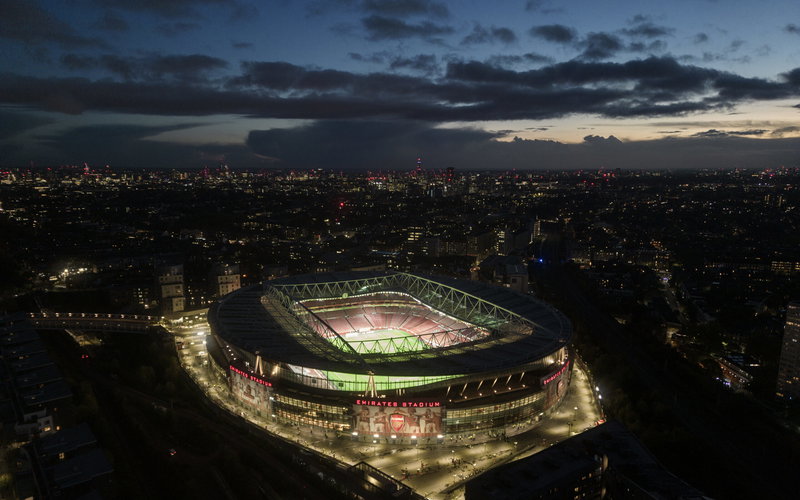
For nearly two decades, to be an Arsenal fan was to live in a state of perpetual bracing. We braced for the February collapse; we braced for the 85th-minute defensive lapse; we braced for the inevitable montage of slumped shoulders set to a melancholic soundtrack on Match of the Day. The “bottling” narrative wasn’t just a rival taunt—it was a ghost that haunted the halls of the Emirates, fueled by the scar tissue of 2023 and the agonising near-misses of 2024.
But as we march through the spring of 2026, the air feels different. The ghosts have been evicted.
The transformation of Mikel Arteta’s Arsenal from “the league’s most watchable bridesmaids” to a “cruel, defensive juggernaut” is the definitive story of this season. It is a shift measured not just in points, but in the collective heartbeat of the North Bank. We are no longer watching a team that hopes to win; we are watching a team that has forgotten how to lose.
The 21-point ghost: Learning from the abyss
To understand the “Cruel Streak” of 2026, we must first look back at the wreckage of the 2024/25 campaign. It was a season of brilliance interrupted by inexplicable fragility. Statistically, that year was an anomaly of agony: Arsenal dropped a staggering 21 points from winning positions. It was the joint-worst record in the club’s Premier League history.
In those moments, the “Psychological Scars” were visible to the naked eye. When an opponent scored in the final fifteen minutes, the Arsenal structure didn’t just bend; it shattered. There was a frantic, desperate quality to our defending—a “hot-potato” approach to possession that invited pressure.
Fast forward to March 2026, and the transformation is jarring. By the 31st matchday of this season, Arsenal has dropped a grand total of 2 points from winning positions. When this team goes 1-0 up in 2026, the game doesn’t just feel managed; it feels over. The “bottling” narrative has been replaced by a “suffocation” narrative.
The architecture of cruelty: Tactical evolution
How did Arteta bridge this gap? It wasn’t through “vibes” or motivational speeches alone. It was through a ruthless evolution of the squad’s physical and tactical profile.
The 2025 summer transfer window was the turning point. The arrival of Martin Zubimendi provided a level of “metronomic” security that even the great Jorginho couldn’t sustain over 90 minutes. Alongside him, the integration of Viktor Gyökeres changed the very geometry of Arsenal’s attack.
In 2024, if Arsenal were under pressure late in a game, they lacked a “battering ram” to relieve the stress. Today, Gyökeres acts as a tactical pressure valve. His ability to hold the ball in the corner, draw fouls, and physically bully tired center-backs allows the Arsenal defense to breathe.
But the real “cruelty” lies in the defence. As of late March 2026, Arsenal has conceded only 22 goals in 31 games. This isn’t just “good” defending; it is historic. The partnership of Saliba and Gabriel has matured into a duo that actively enjoys the “dark arts.” They aren’t just winning headers; they are winning psychological wars.
The final fifteen: Managing the clock
The most significant metric of Arsenal’s new “Championship DNA” is their mastery of the final 15 minutes. Two years ago, the final stretch of a game was a period of high anxiety. In 2026, it is a masterclass in game-state manipulation.
Arsenal has become the Premier League’s most efficient “clock-killer.” Whether it is David Raya taking the full 13 seconds allowed on a goal kick or the team collectively winning “soft” fouls in the middle third, they have weaponised the rules of the game to deny opponents momentum.
Statistically, the “ball-in-play” time in the final ten minutes of Arsenal matches has dropped significantly when they are leading. While neutrals complain about the “death of entertainment,” Arsenal fans see it for what it is: the hallmark of champions. You don’t win titles by being “gallant” in the 89th minute; you win them by making sure the 89th minute never actually happens for the opposition.
The North London derby: A case study in composure
If you need a singular moment that proves the “scars” have healed, look no further than the 4-1 demolition of Tottenham in February.
In years past, a North London Derby away from home was a recipe for emotional volatility. One red card or one VAR decision, and the “old Arsenal” would have spiraled. Instead, we saw a team that absorbed twenty minutes of frantic Spurs pressure, waited for the emotional wave to crest, and then systematically dismantled them on the counter.
There was no panic. There were no slumped shoulders. When Spurs scored their lone goal to make it 2-1, the Arsenal response wasn’t to retreat into a shell; it was to immediately re-assert dominance. They scored two more within ten minutes. That is “Championship DNA”—the ability to turn an opponent’s hope into a liability.
The media narrative: Why the “Bottler” label lingers
Despite the mountain of evidence, the media—led by the usual suspects in the punditry chairs—remains hesitant to crown this Arsenal side. Following the EFL Cup Final loss to Manchester City earlier this month, the headlines were predictable: “Same Old Arsenal?” or “Can They Handle the Heat?”
This skepticism is the final hurdle. The media narrative is built on “lagging indicators.” They are judging the 2026 squad by the failures of the 2024 squad. They see the red and white shirts and assume the fragility is baked into the fabric.
However, the “Trust the Process” era has reached its logical conclusion. Arteta has moved past the “teaching” phase and into the “winning” phase. The disparity in media treatment between Arsenal and, say, a Ruben Amorim-led project is stark. While others are given “free passes” for rebuilding, Arsenal is held to a standard of perfection.
But here is the secret: the team seems to love it. There is a “siege mentality” at the Colney training ground that hasn’t existed since the George Graham era. They know the world is waiting for them to slip. And they are finding a cruel pleasure in staying upright.
The Champions League maturity
Perhaps the most telling sign of this “cruel streak” has been our European form. Reaching the Quarter-Finals after a clinical dismissal of Bayer Leverkusen showed a side of Arsenal we haven’t seen in decades.
In the second leg, Arsenal held a 1-0 lead (2-1 on aggregate). A younger, more “scarred” version of this team might have tried to over-play, invited a Leverkusen press, and conceded a late heartbreaker. Instead, the 2026 Arsenal turned the game into a vacuum. They didn’t allow a single shot on target in the final 30 minutes. It was boring. It was professional. It was beautiful.
Conclusion: The new normal
As we enter the final straight of the 2025/26 season, the question is no longer whether Arsenal can win, but whether anyone is brave enough to stop them.
The “Psychological Scars” of the past have been cauterised. In their place is a team that understands that football is a game of moments, and that the most important moment is the one where you break your opponent’s will.
Whether it is through the defensive solidity of the “Invincible-lite” backline, the tactical cynicism of their game management, or the sheer physical dominance of their new-look spine, Arsenal has evolved. The “bottling” jokes have lost their sting because they no longer reflect the reality on the pitch.
We are witnessing the birth of a new Arsenal era—one defined not by the “patience” we were asked for in 2021, but by the “cruelty” we demanded in 2025. The process has been trusted. The scars have faded. All that remains is the DNA of a champion.