

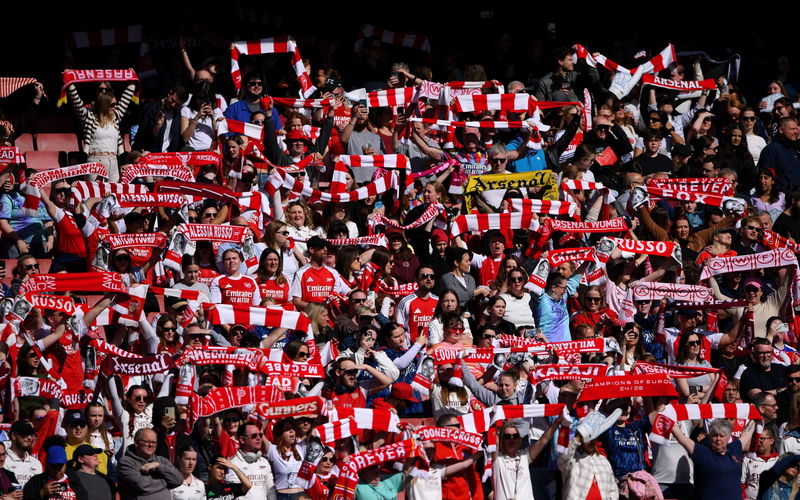
Wembley Way will be a sea of Red and White this Sunday, but as the Arsenal faithful descend upon the national stadium, there is a strange, lingering ghost following them. It is a ghost that has haunted the club for exactly 33 years.
In the pantheon of Arsenal’s silver-lined history, the League Cup (now the Carabao Cup) remains a baffling anomaly. We are the undisputed Kings of the FA Cup with 14 trophies. We have gone “Invincible” in the league. We have tasted European success in the Cup Winners’ Cup. Yet, the League Cup remains our “Final Frontier.” Since that bizarre, bittersweet afternoon in April 1993, the trophy has stubbornly refused to return to North London.
As Mikel Arteta prepares to lead his side out against Pep Guardiola’s Manchester City on March 22, 2026, he isn’t just fighting for a trophy; he is fighting a three-decade-old hex. This is more than a final; it is a psychological exorcism.
The bittersweet memory of 1993: Where the clock stopped
To understand the weight of Sunday’s final, we have to go back to 1993—the last time Arsenal lifted this trophy. It was a season of firsts: the first time the same two teams (Arsenal and Sheffield Wednesday) met in both domestic cup finals, and the first time squad numbers and names appeared on shirts.
It was a day defined by Steve Morrow, the unlikely hero who scored the winner, only to be famously dropped by Tony Adams during the post-match celebrations. Morrow’s broken arm meant he missed the trophy lift, eventually receiving his medal while on a stretcher before the FA Cup final a month later.
It was a gritty, George Graham-style victory—all defensive solidity and opportunistic finishing. But little did we know then that Morrow’s winning goal would be the last time an Arsenal captain would hoist this specific silver pot in the air for over a generation. Since that day, the world has changed, Highbury has been vacated for the Emirates, and a revolution has taken place in North London, yet this one piece of silverware remains conspicuously absent from the trophy cabinet.
The “Young Guns” and the trauma of 2011
Since 1993, the League Cup has been a source of profound frustration. We hold a record we’d rather not have: the most runner-up finishes in the competition’s history (6). For much of the Arsène Wenger era, the League Cup was a developmental laboratory. It gave us our first glimpses of Cesc Fàbregas, Theo Walcott, and Jack Wilshere, but it also birthed deep-seated scars.
Who can forget the 2007 “Young Guns” final? Arsenal’s teenagers played Chelsea’s “Invincibles” off the park, only to be bullied by the brute force of Didier Drogba. It was a lesson in the difference between “playing well” and “winning.”
Then came the trauma of 2011—perhaps the darkest day in our League Cup history. Against a Birmingham City side destined for relegation, a horrific last-minute defensive mix-up between Laurent Koscielny and Wojciech Szczęsny allowed Obafemi Martins to tap into an empty net. That defeat didn’t just cost us a trophy; it derailed a season where we were competing on four fronts. It became the symbol of a “soft” Arsenal—a team that could dominate possession but crumbled under the slightest bit of chaotic pressure.
Even in 2018, the gap in quality felt like a chasm as we slumped to a 3-0 defeat against the very same Manchester City we face tomorrow. For thirty years, this competition has felt like a “cursed” endeavour—a trophy that Arsenal either took too lightly or found a way to lose in the most agonising fashion possible.
The Arteta revolution: A change in priority
So, what makes March 22, 2026, different? Why should we believe the hex ends now?
The answer lies in the shift in culture spearheaded by Mikel Arteta. Under previous regimes, the League Cup was often seen as a distraction—a place to rest the “A-team” and blood the academy. Arteta has inverted that logic. In this 2025/26 campaign, he has treated every round with the clinical intensity of a Champions League knockout tie.
This isn’t the “League Cup kids” of the Wenger era. Look at the road to Wembley: we didn’t just scrape past mid-table sides; we went to the Amex and dismantled Brighton, and we stood firm in a hostile Stamford Bridge to eliminate Chelsea. Arteta has imbued this squad with a “win everything” mentality. He understands that for a young squad to become a dynasty, they must develop a “trophy habit.”
Winning the Carabao Cup isn’t just about the silverware; it’s about the psychological momentum. Just as George Graham’s 1987 League Cup win over Liverpool acted as the catalyst for the 1989 Anfield miracle, Arteta knows that lifting this trophy tomorrow could be the fuel for the Premier League and Champions League charges that follow. It is the “appetiser” for a potential quadruple.
The “Wembley Aura” of the manager
If there is such a thing as “stadium karma,” it is heavily tilted in Arsenal’s favour tomorrow. Mikel Arteta possesses a statistical anomaly that borders on the supernatural: The man does not lose at Wembley.
As a player and manager for Arsenal, Arteta has visited the national stadium eight times. His record? Eight wins, zero losses.
-
He captained us to FA Cup glory in 2014, ending our nine-year trophy drought.
-
He masterminded the 2020 FA Cup win over Chelsea behind closed doors, a tactical masterclass in defensive transition.
-
He has secured Community Shields against the likes of Liverpool and, crucially, a penalty shootout victory over Manchester City in 2023.
Arteta treats Wembley as his own backyard. He understands the unique dimensions of the pitch, the way the wind swirls, and the “big-game” temperament required to stay calm under the arch. When he walks out of that tunnel tomorrow, he isn’t walking into a neutral venue; he’s walking into his fortress. His players feel that confidence. They don’t see Wembley as a place of pressure; they see it as a place of celebration.
Tactical chess: The 2026 Arsenal identity
Tactically, this Arsenal side is light-years ahead of the teams that fell short in 2011 or 2018. We are no longer a “possession for possession’s sake” team. The 2026 iteration of Arsenal is a physical, suffocating monster.
The duel in the middle of the park will be where the game is won or lost. With Martin Zubimendi acting as the “brain” and Declan Rice providing the “brawn,” Arsenal have a midfield balance that can match Rodri and Kevin De Bruyne. Furthermore, the defensive partnership of William Saliba and Gabriel Magalhães has matured into the most formidable duo in world football. They represent the “anti-2011″—a pairing that thrives on pressure rather than wilting under it.
City, meanwhile, are vulnerable. Coming off a bruising midweek exit from the Champions League at the hands of Real Madrid, Pep Guardiola’s side looks leg-heavy. With the news that City will likely start their “cup keeper” James Trafford, the pressure on their back line will be immense. Arsenal’s high press, led by the relentless Kai Havertz and Martin Ødegaard, is designed specifically to exploit these moments of hesitation.
The narrative of the “New Hero”
Every great cup run needs a hero. In 1987, it was “Champagne” Charlie Nicholas. In 1993, it was the unlikely Steve Morrow. Tomorrow, the stage is set for a modern icon.
Will it be Bukayo Saka, the “Starboy” who has grown into a global superstar, finally getting his hands on a trophy that has eluded him? Or perhaps Kai Havertz, the man who already has a Champions League-winning goal to his name and seems to find his best form when the lights are brightest? Even if it’s a grit-and-grind 1-0 win secured by a Saliba header from a corner, the narrative remains the same: this team is ready to cross the finish line.
Conclusion: Breaking the 33-Year hex
As we stand on the precipice of Sunday’s final, the 33-year drought feels less like a burden and more like a motivation. For three decades, Arsenal fans have had to listen to rivals mock our record in this competition. We have watched the trophy go to Chelsea, United, Liverpool, and City over and over again.
Winning the Carabao Cup tomorrow won’t define this season—our sights are set much higher on the Premier League and Champions League—but it will validate the “Process.” It will prove that the culture of the club has fundamentally shifted from “participants” to “winners.”
The “Final Frontier” has stood for too long. Tomorrow, at 4:30 PM, the whistle will blow and 33 years of frustration will be funnelled into 90 minutes of football. Under the Wembley arch, with Arteta’s Midas touch guiding them, it is time for the Gunners to finally bring the three-handled trophy back to North London.
The hex ends now.
Come on you Gunners.