

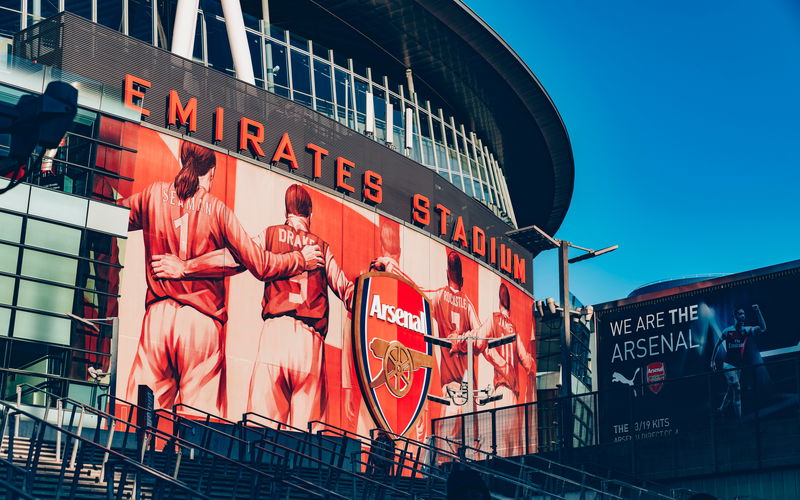
Arsenal spent several seasons trying to catch Manchester City before finally winning the Premier League in 2025/26. Their challenge has now changed. Mikel Arteta’s team are no longer attempting to prove that they can become champions. They must show that they can remain champions while also competing for the Champions League.
Three league victories have provided an ideal start. Arsenal have beaten Coventry City, Aston Villa and Chelsea, collecting nine points and keeping pace with Manchester City. Interest in the opening weeks stretches across television coverage, supporter channels, fantasy football and entertainment platforms such as online slots UK, but the table already poses a serious sporting question. Have Arsenal improved enough to retain the title?
An opening Champions League victory at Napoli has strengthened the early optimism. Martin Ødegaard scored the only goal in a controlled 1-0 win, helping Arsenal begin another demanding European campaign with three points.
What has changed since Arsenal won the Premier League?
Winning the title can make a squad appear complete, but Arsenal did not treat the summer as an opportunity to stand still. Their recruitment concentrated on adding experience, physical strength and alternatives in several positions.
Bruno Guimarães was the major arrival. The Brazilian midfielder joined after establishing himself as one of Newcastle United’s most influential players. His ability to receive possession under pressure, carry the ball and compete aggressively gives Arteta another way to control central areas.
The £75 million signing should also reduce the physical burden on Declan Rice. Rice made 69 appearances for club and country last season and managed a hamstring problem during the World Cup. He remains capable of playing regularly, but Arsenal cannot assume he will maintain that workload without consequences.
Ezri Konsa joined after several consistent seasons with Aston Villa. He can play centrally or on the right of the defence, which matters to an Arsenal team that regularly asks defenders to cover more than one role.
Piero Hincapié’s loan move was made permanent, while goalkeeper Illan Meslier arrived after leaving Leeds United. Christos Tzolis was signed to provide energy and direct attacking play following Leandro Trossard’s departure.
None of these moves completely changes Arsenal’s identity. They give Arteta more ways to preserve it when injuries, suspensions and fixture congestion begin to affect his preferred line-up.
Why could Bruno Guimarães be so important?
Arsenal already had a strong midfield, but Guimarães addresses a specific problem. Rice, Ødegaard and the deeper midfield options were often asked to start important matches with limited rest. A long run in Europe increased that pressure.
Guimarães can operate as a defensive midfielder or play further forward. He is comfortable collecting the ball near his own penalty area, but he also has the personality to demand possession in crowded central positions.
That flexibility should allow Rice to move between roles. Against opponents sitting deep, Rice can make forward runs while Guimarães manages the space behind him. During more difficult away matches, the pair can play together to make Arsenal harder to counter.
There is still an adjustment to make. Guimarães was given considerable freedom at Newcastle and often became the central figure in their possession. At Arsenal, he enters a more structured system in which Ødegaard directs much of the attacking play.
Arteta must give both midfielders enough influence without slowing the team down. If he succeeds, Arsenal will have one of the league’s strongest combinations of physical power, technical control and defensive awareness.
Is Martin Ødegaard returning to his best?
Ødegaard’s early form is one of the most encouraging features of Arsenal’s season. He scored the winner against Napoli and played a major role in the 2-1 comeback victory over Chelsea.
Arsenal fell behind inside the opening minute of that London derby, but Kai Havertz equalised before Ødegaard completed the turnaround. The result extended Arsenal’s unbeaten run against Chelsea to 13 matches.
In Naples, the captain was again decisive. His second-half goal followed a sharp exchange of passes with Tzolis on the edge of the area. Arsenal created enough opportunities to win by a wider margin, but Ødegaard supplied the finish that separated the teams.
His influence cannot be measured only by goals. Ødegaard sets the tempo of Arsenal’s pressing and helps Bukayo Saka find space on the right. When the Norwegian receives possession between midfield and defence, Arsenal can attack before the opponent has time to reset.
Four goals this early in the season suggest he may also be ready to contribute more regularly in the penalty area. That would ease some of the pressure on Arsenal’s forwards.
Do Arsenal still need another leading attacker?
The main criticism of Arsenal’s summer business concerns the absence of a marquee forward. Several attacking players were linked with the club, but no major deal was completed before the window closed.
Gabriel Jesus departed for Barcelona, Trossard joined Beşiktaş and Gabriel Martinelli also moved on. Ethan Nwaneri left on loan for Borussia Dortmund, removing another creative option from Arteta’s immediate squad.
Tzolis should help replace some of that attacking depth. Noni Madueke can play in wide areas, while Havertz remains capable of operating centrally or behind the striker. Saka is still the team’s most reliable attacking threat.
The concern is that a serious injury to Saka or Havertz could leave Arsenal short of proven match-winners. Arteta has versatile players, but versatility is not quite the same as elite output.
Arsenal produced 26 attempts against Napoli but won only 1-0. Saka missed a clear first-half chance, Madueke failed to convert when through on goal and a late Havertz effort was disallowed. It was an excellent away performance, yet it also illustrated why the forward debate has not disappeared.
Can Arsenal balance the league and Champions League?
Arsenal came extremely close to winning the Champions League last season, losing the final to Paris Saint-Germain on penalties. That experience should increase their belief, but another extended European run will place significant demands on the squad.
The league phase has given Arsenal a challenging schedule. Matches against Bayern Munich, Borussia Dortmund and Real Madrid are still to come, alongside fixtures against Lille, Slavia Prague, Real Betis and Sabah.
The difficulty is not limited to those European nights. Arsenal must recover quickly enough to handle league matches a few days later. The current sequence illustrates the problem, with the trip to Napoli followed by an away match against Sunderland.
Arteta now has enough defensive and midfield depth to rotate without completely changing his system. The greater uncertainty is in attack, where Saka and Ødegaard remain difficult to replace.
Managing Rice will also require discipline. Players naturally want to start major matches, but an occasional rest in September or October could prevent a more serious problem later in the season.
What would make this a successful season?
Retaining the Premier League must be Arsenal’s primary domestic target. After winning the title, finishing second would no longer feel like evidence of progress, even if the points total remained high.
The Champions League is more complicated. Reaching last season’s final established Arsenal among Europe’s strongest teams, but knockout competition can turn on injuries, one poor decision or a penalty shootout. Returning to the latter stages while sustaining a title challenge would confirm that the club belongs at that level.
Arsenal’s early results have been almost faultless. Nine league points and an away Champions League victory represent the strongest possible foundation. The defence remains difficult to break down, Ødegaard is producing decisive moments and the new midfield options should help Arteta manage a crowded calendar.
The unanswered question concerns attacking depth. Arsenal may control most matches, but narrow victories leave little room for error. Turning dominant performances into more comfortable scorelines would reduce pressure on the defence and protect key players.
For now, Arsenal look fully capable of retaining the Premier League. The real test will arrive when the fixtures become less forgiving and Arteta has to win without using the same core players every week.
Image Source: unsplash.com