

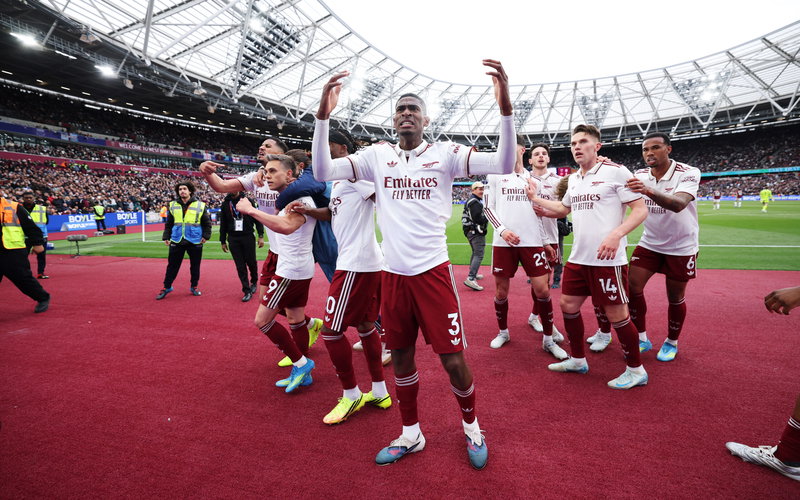
Introduction: The weight of 22 years
There is a unique kind of cruelty in footballing exile. It is not the sudden, sharp shock of relegation or the immediate tragedy of a cup final defeat; rather, it is the slow, corrosive passing of time. For twenty-two years, Arsenal Football Club has existed in a state of suspended animation regarding the ultimate prize of English football. To a generation of supporters, the year 2004 is not just a date on a calendar; it is a mythical epoch. It represents the last time the red and white ribbons of Arsenal were intertwined with the handles of the Premier League trophy.
Since that historic, undefeated campaign under Arsène Wenger, the footballing world has shifted entirely on its axis. Empires have risen and fallen, geopolitical wealth has completely altered the landscape of the division, and the Emirates Stadium has transformed from a gleaming, debt-laden promise of the future into a Colosseum that has tasted far more anxiety than ecstasy. For over two decades, Arsenal fans have been forced to look upward. We have watched rivals hoist the trophy, endured the mocking choruses of “Where’s your famous trophy gone?” and suffered through the banter era a period where the club’s identity felt compromised, diluted, and detached from the elite tier it once ruled.
Now, standing at the absolute precipice of glory in this gruelling 2025/26 campaign, the dream is no longer a coping mechanism. It is a tangible reality. With Mikel Arteta’s side navigating a titanic, high-stakes chess match against Manchester City’s relentless machine, the perspective of what this title would mean stretches far beyond a mere piece of silverware.
To finally lift the Premier League trophy after twenty-two years of wandering the wilderness would represent the ultimate validation. It would be a monumental catharsis for a global fan community that has kept the faith through toxic civil wars, managerial transitions, and heartbreak. It would cement Mikel Arteta’s legacy as a structural saviour, and it would immortalise a young, fearless squad that refused to be broken by the ghosts of Arsenal’s past. This is the story of what it means to finally brush off the weight of two decades and reclaim the summit.
Part I: The ghost of 2004 and the trauma of the wilderness
To understand the sheer magnitude of what an Arsenal title means today, one must understand the psychological scar tissue left behind by the last twenty-two years. When Patrick Vieira dispatched that penalty against Leicester City in May 2004 to seal the Invincible season, nobody could have predicted that a famine was about to begin. The move from Highbury to Ashburton Grove was sold as the catalyst that would allow Arsenal to compete with the global elite, but the reality was a decade of financial austerity.
Arsenal became a developmental house, a club that played beautiful, fragile football but routinely saw its finest assets stripped away by wealthier, more ruthless predators. The fan base watched in horror as Cesc Fàbregas, Robin van Persie, and Samir Nasri departed, leaving behind a team that could occasionally win an FA Cup but lacked the physical and mental spine required to sustain a 38-game assault on the Premier League title.
The wilderness years did something dangerous to the collective psyche of Gooners across the globe. It bred a culture of hyper-cynicism and defensive pessimism. We became a fan base defined by the “collapse”—the inevitable spring capitulation where a dynamic, exciting team would suddenly lose its nerve at St James’ Park, Anfield, or the Etihad, watching the season evaporate in a matter of weeks. The division within the fan community became toxic; the late Wenger era was characterised by a civil war between those desperate to preserve the dignity of a legendary manager and those who recognised that the club had drifted into a comfortable, top-four-obsessed mediocrity.
When Unai Emery’s brief tenure ended in tactical confusion and a toxic atmosphere, the club felt completely unbothered from its historic roots. The identity was gone. The stadium was quiet, filled with apathy and empty seats. The global fan base, spanning from North London to Lagos, New York to Mumbai, was unified only by a shared sense of disillusionment. We were no longer feared; we were patronised. To brush off that twenty-two-year drought is to permanently erase that era of submission. It is the definitive declaration that Arsenal are no longer a nostalgic heritage act, but a modern footballing superpower.
Part II: Mikel Arteta’s vindication – from “process” to paradigm
At the heart of this resurrection stands a man who understood the weight of the club’s history because he wore the captain’s armband during some of its most turbulent modern years. When Mikel Arteta walked through the doors of the Emirates Stadium in December 2019, he did not just inherit a bloated, demotivated squad; he inherited a broken institution.
The phrase “Trust the Process” became a cultural battleground. In the early days marked by an eighth-place finish, tactical rigidity, and the ruthless purging of highly-paid, disruptive superstars, Arteta was routinely dismissed by the wider footballing media. He was labelled a PE teacher, a corporate buzzword machine, and a cheap imitation of his mentor, Pep Guardiola. Rivals laughed at his touchline antics, mocked his “cultural presentation,” and waited for the inevitable sack.
Yet, what Arteta was doing was nothing short of an institutional overhaul. He was completely redefining what it meant to represent Arsenal Football Club. He demanded “non-negotiable,” rebuilt the club’s scouting apparatus, and slowly replaced individualistic talent with collective, tactical discipline.
ARTETA'S REBUILD TIMELINE:
[2019-2021: Institutional Purge & Cultural Reset]
       └──> [2022-2024: Tactical Evolution & The Near Misses]
                 └──> [2025-2026: Title Sovereignty & Defensive Maturity]
For Arteta, winning this Premier League title is the ultimate, undeniable vindication. It places him alongside Herbert Chapman, Bertie Mee, and Arsène Wenger in the pantheon of Arsenal’s transformational managerial figures.
Consider the political and mental fortitude required to survive the agonising near-misses of the previous two seasons. Lesser managers and fragile squads would have suffered a permanent psychological hangover after pushing Manchester City to the absolute limit, only to fall short on the final day. Instead, Arteta used those defeats as fuel. He adapted his tactical blueprint, moving away from the chaotic, high-fructose football of his early years toward a cold, suffocating, defensive sovereignty.
To win the league in 2026 is to prove that his vision was correct all along. It proves that the patience shown by the hierarchy was not blind faith, but calculated wisdom. Arteta will have taken a club that was drifting toward permanent mid-table obscurity and, through sheer force of will and tactical genius, dragged them back to the absolute apex of European football. He will have beaten the most expensively assembled, state-backed footballing machine in history at their own game.
Part III: The immortality of the new era squad
If the manager provides the blueprint, this current crop of Arsenal players has provided the soul. What makes this potential title triumph so incredibly intoxicating for the global fan base is the identity of the players who will lift it. This is not a mercenary squad built on short-term fixes; it is a team constructed with immaculate foresight, featuring individuals who have grown, suffered, and matured together under the Emirates lights.
The leadership of the captain
Take Martin Ødegaard, a player once discarded by the ruthless machine of Real Madrid, who found a spiritual home in North London. As captain, Ødegaard personifies the Arteta era: technically flawless, relentlessly hardworking, and quietly fiercely competitive. To see him lift the Premier League trophy would complete one of the finest redemption arcs in modern football storytelling.
The homegrown standard
Then there is Bukayo Saka, the boy from Hale End who carried the weight of this football club on his young shoulders when it had no right to ask that of him. From the racist abuse suffered after the Euros in 2021 to becoming a truly world-class, unguarded right winger, Saka represents every single fan who ever kicked a ball in Islington. His success is our success. A Premier League title elevates Saka from a beloved academy graduate to an undisputed club legend, cementing his place alongside the greats of Highbury.
The defensive concrete
The transformation of Arsenal into the meanest, most impenetrable defensive unit in the division is spearheaded by the telepathic partnership of William Saliba and Gabriel Magalhães. For years, Arsenal were criticised for having a “soft underbelly.” Today, teams walk into the Emirates knowing they are about to endure 90 minutes of physical and psychological claustrophobia. Supported by the trans formative, structural presence of Declan Rice in the midfield engine room—a player who chose Arsenal specifically to win the biggest prizes—and the clinical, dynamic addition of elite forward power like Viktor Gyökeres, this squad has found the perfect equilibrium between defensive steel and offensive fluidity.
THE CHAMPIONSHIP CORE:
┌────────────────────────────────────────────────────────┐
│                        GYÖKERES                        │
│                   (Clinical Firepower)                 │
├───────────────────────────┬────────────────────────────┤
│           SAKA            │          ØDEGAARD          │
│    (Hale End Royalty)     │     (Tactical Maestro)     │
├───────────────────────────┴────────────────────────────┤
│                          RICE                          │
│                   (Structural Engine)                  │
├───────────────────────────┬────────────────────────────┤
│          GABRIEL          │          SALIBA            │
│    (Defensive Concrete)   │     (Rolls-Royce Centric)  │
└───────────────────────────┴────────────────────────────┘
For this squad to get over the line means instant immortality. They will no longer be compared to the Invincible’s as pretenders to the throne; they will stand beside them as equals. They will have proven that you can build a championship-winning team through smart recruitment, elite coaching, and collective harmony, rather than simply writing blank cheques.
Part IV: A global catharsis – The view from the stands and beyond
Football, at its core, is an emotional economy. The currency is not the money generated by television rights or commercial sponsorship, but the shared joy, anxiety, and relief of millions of people who dedicate their weekends to a football club. For the global Arsenal fan base, this title is the ultimate release of pressure.
For twenty-two years, supporting Arsenal has required a thick skin. It has meant enduring the smug taunts of rival fans, the lazy narratives of mainstream pundits who accused the club of lacking “bottle,” and the quiet, internal dread that perhaps we would never see Arsenal at the top of the mountain again. It meant waking up at 4:00 AM in Los Angeles, staying up past midnight in Singapore, or crowding around a single television screen in Lagos, hoping against hope that this would be the year.
To finally break the cycle would create a wave of global celebration unlike anything English football has seen in decades. The scenes outside the Emirates Stadium, down the Hornsey Road, and in the pubs of Islington will be mirrored in thousands of supporters’ clubs across every continent. It will be a moment of profound validation for the older generation who remember the glory of 2004 and had to explain to their children what it felt like to be champions. It will be an awakening for a younger generation of fans who have only ever known Arsenal as the valiant runners-up or the transition-era project.
“Lifting this title means brushing off the collective trauma of twenty-two years. It is the moment the doubts die, the banter ends, and the pride of being an Arsenal fan is restored unreservedly.”
This title will completely reshape the media narrative surrounding the club. For years, Arsenal’s failures were analysed under a microscope, while their successes were often downplayed as temporary hot streaks. Winning the league silences the noise permanently. It turns the “Trust the Process” moniker from a punchline into a masterclass blueprint that clubs across Europe will desperately try to replicate.
Conclusion: The summit attained
The Premier League season is a brutal, unyielding marathon. It tests every facet of a football club: its tactical depth, its financial resolve, its medical department, and, above all, its mental fortitude. To win it requires a team to be near-flawless, particularly when competing against the mechanical efficiency of Manchester City.
If Mikel Arteta and this magnificent Arsenal squad secure those final, crucial points to bring the Premier League trophy back to North London after twenty-two long years, it will be much more than just a statistical entry into the history books. It will be the completion of a modern footballing epic. It will be the story of a club that lost its way, suffered an identity crisis, endured ridicule, and then, through the vision of a young manager and the courage of a young squad, systematically rebuilt itself from the foundations up to reclaim its rightful place at the absolute peak of English football.
For the fans, it is the realisation of a dream that often felt dangerously out of reach. The weight of twenty-two years of frustration, near-misses, and heartbreak will instantly evaporate the moment that trophy is hoisted into the air. The red and white ribbons will flutter in the London breeze once again, and millions of fans across the globe will finally look at the Premier League table, see the Arsenal crest sitting proudly at the absolute summit, and know that the long, arduous journey through the wilderness is officially over.
We can finally stop dreaming. We are the champions of England.