

In the volatile world of North London football, the distance between “The Messiah” and “The Outcast” is often measured in a single match week. Just seven days ago, Arsenal sat on the precipice of a potential 12-point lead at the top of the Premier League, fresh off a gritty 1-0 Champions League win in Lisbon. Fast forward to this Monday, April 13, 2026, and the mood has shifted from celebratory to combustible.
The catalyst for this latest firestorm was a shock 2-1 home defeat to Bournemouth on Saturday. Not only did the result invite Manchester City back into the title slipstream, but it also triggered a mass walkout at the Emirates minutes before the final whistle—a visual representation of a fanbase reaching its boiling point. In the vacuum of that frustration, a narrative many thought was buried has re-emerged: the potential end of the Mikel Arteta era.
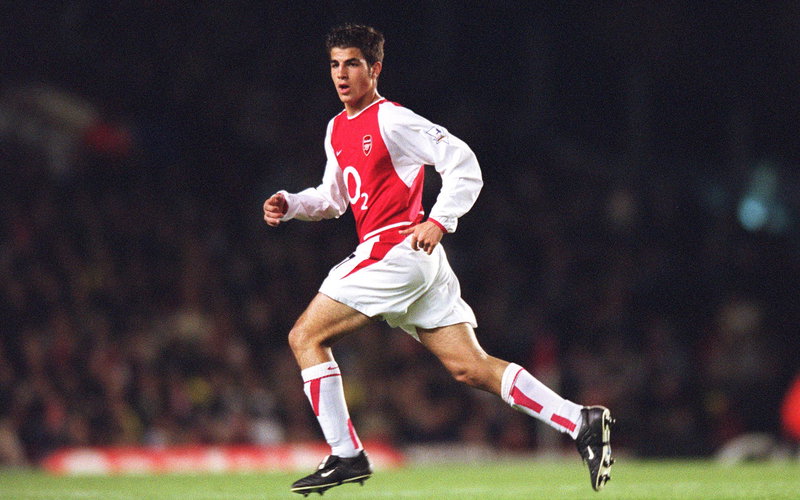
The spark was officially lit by reports from Spain via Mundo Deportivo, suggesting that senior officials at the Emirates have identified former captain and current Como 1907 boss Cesc Fabregas as the primary candidate to take the reins should Arsenal end this season trophy-less. It is a report that has divided the fanbase down the middle, pitting the “Stability Guard” against the “Radical Reformists.”
The “Stability” argument: A process finally peaked
To discuss an “Arteta-less” Arsenal right now feels, to many, like a form of collective insanity. We are in April 2026, and despite the Bournemouth blip, Arsenal remains in a position most clubs would envy. They are locked in a neck-and-neck title race with Manchester City and hold a 1-0 lead heading into the second leg of a Champions League quarter-final against Sporting CP.
For the first time in the “Process,” the squad feels structurally complete. The summer 2025 arrivals of Viktor Gyökeres and Martín Zubimendi were the final pieces of a multi-year jigsaw. Gyökeres has been a revelation, netting 18 goals across all competitions this season—including a crucial strike against Bournemouth that momentarily offered hope. His debut season tally puts him in the company of legends like Ian Wright and Thierry Henry. Meanwhile, Zubimendi has provided the “floor” this team lacked, boasting a passing accuracy of nearly 89% and anchoring a midfield that has kept the Gunners in the hunt for four trophies until recently.
Under Arteta, Arsenal has moved from a team that “could” win to a team that “should” win. He has survived the early years of austerity, the clearing of the deadwood, and the heartbreak of the 2024 and 2025 title near-misses. With a contract running until June 2027 and renewal talks reportedly only “paused” to maintain focus on the run-in, the logic for stability is overwhelming. Replacing the man who built the house just as the roof is being tiled seems counter-intuitive. Arteta has restored the club’s elite status; to remove him now would be to gamble with the very foundation he laid.
The Fabregas factor: romanticism or revolution?
However, the shadow of Cesc Fabregas is a long one. At 38, Fabregas has become the “wunderkind” of European coaching. His work at Como 1907 in Serie A has been nothing short of miraculous. He has maintained a win percentage of approximately 60% and has a modest Italian side currently challenging Juventus and AC Milan for European spots.
Where Arteta is a disciple of Pep Guardiola’s “Juego de Posicion”—often criticised for being overly rigid or “conservative” in high-pressure moments—Fabregas represents a return to a more fluid, improvisational attacking verve. The Mundo Deportivo report suggests the Arsenal hierarchy is enamored with this tactical flexibility. While Arteta’s system is a well-oiled machine, it can occasionally feel predictable. Fabregas, by contrast, has built a Como side that thrives on transition and creative freedom—traits that resonate deeply with those who pine for the “Wengerball” era.
The argument for Cesc isn’t just about nostalgia; it’s about the “ceiling.” Critics of Arteta point to the recent Carabao Cup final loss to Manchester City and the FA Cup quarter-final exit to Southampton as evidence of a tactical glass ceiling. The fear is that while Arteta has made Arsenal consistent, he may lack the knockout instinct required to overcome the final hurdle. In this light, Fabregas is seen not as a nostalgic hire, but as a “high-upside” gamble meant to break the stalemate of second-place finishes.
The “Amorim” disparity and media narratives
This brings us to a familiar grievance: the disparity in how Arteta is judged compared to his peers. When Ruben Amorim took over at Sporting or was linked with Premier League giants after his first 50 games, he was hailed as a tactical genius regardless of immediate silverware. There was a patience afforded to Amorim—and even the early days of Xabi Alonso—that Arteta has never truly enjoyed.
Arteta has been subjected to a “trial by trophy” since his first day. Even now, the narrative remains: If he doesn’t win the League or the Champions League this May, has the project failed? It is a harsh metric. No other manager in the post-Wenger era has navigated the political and financial rebuild Arteta has. He has integrated generational talents like Max Dowman—who recently became the youngest player to feature in a Champions League quarter-final at just 16—and Ethan Nwaneri, ensuring the club’s future is secure. Yet, the moment a result like the Bournemouth loss occurs, the media pivots to the “Succession” narrative, a pressure rarely applied so ruthlessly to managers in similar “rebuild” phases.
The financial and political capital
We must also look at the investment. Arsenal has spent upwards of £700m under Arteta’s watch. This financial backing is a double-edged sword. On one hand, it has provided the tools (Gyökeres, Rice, Ødegaard, Zubimendi). On the other, it removes the “underdog” shield.
The club is currently marking its centenary year in the top flight (1926–2026), a milestone that brings its own weight of expectation. For the Kroenkes, the investment was made for one reason: to win the biggest prizes. If Arsenal “bottles” the title again—allowing a double-digit lead to evaporate in the face of a City surge—the political capital Arteta has built will be tested. The board’s alignment with Arteta has been his greatest defense, but as the fans’ apprehension grows, that alignment may begin to fray.
Tactical conservatism vs. modern fluidity
A deep dive into the 2025/26 season reveals why the Fabregas rumors have gained such traction. In matches where Arsenal have struggled—the 1-1 draws and 2-1 losses—the “conservatism” of Arteta’s 4-3-3 has been the primary talking point. Against Bournemouth, despite having 65% possession, Arsenal looked toothless in the final third until the 75th minute.
Fabregas’s 4-2-3-1 at Como, by contrast, relies on rapid verticality. He has coached a side with a much lower budget to take 20 shots on goal against Inter Milan—something few sides achieve. Fans are asking: With our personnel, should we be more daring? If Arteta’s “Process” is about control, the Fabregas “Revolution” is about risk. For a fanbase that has watched Manchester City achieve clinical perfection for a decade, the desire for a manager who can “out-think” the opposition in a chaotic, high-scoring affair is becoming more prominent.
The “Time” disparity: Is six years enough?
The most significant factor in the Fabregas rumors is the “time” disparity. Arteta is now in his sixth year. In the modern game, six years is an eternity without a Premier League or Champions League title. The “Trust the Process” slogan, once a rallying cry, has become a punchline for rivals.
When you compare this to the narrative surrounding other young managers, the difference is clear. Arteta was expected to rebuild a culture, a squad, and a scouting network simultaneously. He has done all three. But in the eyes of the media, the “building” phase ended two years ago. We are now in the “Delivery” phase. If the delivery fails this May, the logic follows that a new perspective—one like Fabregas’s—might be the only way to shock the system into a winning gear.
Conclusion: A season on a knife’s edge
Is it premature to talk about Fabregas? Absolutely. Arsenal is still potentially five weeks away from a historic Double. To destabilise the camp with succession rumors while Sporting CP prepares to visit the Emirates for the second leg is peak “Arsenal Chaos.” It ignores the fact that Arteta has achieved a consistency at this club that was unthinkable in 2019.
However, the rumors serve as a stark reminder: At a club of this size, the “Process” cannot be eternal. Eventually, the process must become the “Product.”
Arteta has built a magnificent machine. He has integrated the youth, secured the world-class talent, and restored the fear factor to the Emirates. But in the cold light of April 2026, the only thing that will truly silence the Fabregas talk is a trophy on the bus through Islington. The shadow of Cesc is not a threat yet, but it is a ghost that will continue to haunt the Emirates until Mikel Arteta finally puts the “bottling” narrative to rest once and for all.
The next five weeks will not just define Arsenal’s season; they will define the legacy of the “Process.” Either Arteta cements his place in the pantheon of Arsenal greats, or the board may decide that the “romantic” return of Cesc Fabregas is the gamble worth taking to finally reach the summit.